

This article will provide a brief overview of the three key financial statements: the income statement, balance sheet, and statement of cash flows. These statements are interconnected and provide important information about a company’s profitability, financial position, and cash flow. We will discuss the purpose and components of each statement, as well as how they are all linked together. Understanding the relationship between these statements is crucial for effectively analyzing a company’s financial health.
The Purpose and Components of the Income Statement
When it comes to financial reporting, the income statement serves a crucial purpose in demonstrating a company’s profitability within a specific period. It provides a comprehensive summary of a business’s revenues and expenses, ultimately leading to the generation of net income. Under the accrual accounting rules, the income statement showcases how much money the company made (revenue), the costs incurred in generating that revenue (expenses), and the resulting profitability (net income) during a particular period. This statement is vital in assessing a company’s financial performance and is often utilized by various stakeholders, including investors, analysts, and creditors, to evaluate the company’s operational efficiency and potential for growth.
Components of the income statement typically include the revenue/sales, cost of goods sold (COGS), gross profit, operating expenses, non-operating expenses, taxes, and the net income. Revenue represents the amount of money earned from the company’s primary activities, while COGS encompasses the direct costs associated with the production of goods sold by the company. Gross profit is derived by deducting COGS from revenue. Operating expenses comprise the costs incurred from normal operating activities, while non-operating expenses are unrelated to the primary business activities. The variance between revenues, COGS, and expenses ultimately leads to the calculation of net income, which is a pivotal figure in financial analysis and decision-making.
Analysts and finance professionals extensively utilize the income statement to gauge a company’s financial health and performance. It also serves as a fundamental component in financial modeling and valuation, aiding in the projection of future financial performance and potential scenarios for the business. Understanding the income statement is imperative for making informed investment decisions and strategizing for the company’s long-term growth and sustainability.
The Balance Sheet Shows a Snapshot of a Company’s Financial Position
In contrast to the income statement, the balance sheet provides a distinct insight into the financial position of a company at a specific point in time. It portrays a snapshot of the company’s assets, liabilities, and shareholders’ equity, offering a comprehensive overview of what the company owns and owes, as well as the amount invested by the shareholders. This crucial financial statement adheres to the fundamental accounting equation, which states that the total assets of a company are always equivalent to the sum of its liabilities and shareholders’ equity.
The balance sheet is structured into two chief sections: the assets and the liabilities and equity. The assets section encompasses current assets, such as cash, accounts receivable, and inventory, as well as long-term assets like property, plant, and equipment (PP&E) and intangible assets. On the other hand, the liabilities and equity section includes current liabilities, long-term liabilities, and shareholders’ equity. Current liabilities comprise obligations due within a year, while long-term liabilities encompass debts payable beyond the following year. Shareholders’ equity represents the amount invested by the company’s owners and the retained earnings resulting from the company’s historical net income and dividends.
Assets, Liabilities, and Equity on the Balance Sheet
The meticulous categorization of assets, liabilities, and equity on the balance sheet provides valuable insights into the liquidity, solvency, and overall financial health of a company. It offers a clear depiction of the company’s resources, the amount it owes, and the residual value attributable to the shareholders. By presenting a comprehensive breakdown of these fundamental components, the balance sheet plays a pivotal role in enabling stakeholders to assess the company’s ability to meet its short-term and long-term obligations, its operational efficiency, and the magnitude of the shareholders’ stake in the business.

Financial analysts, investors, and creditors rely on the balance sheet to conduct a thorough evaluation of a company’s financial position and make well-informed decisions. The data presented in this financial statement is instrumental in determining a company’s creditworthiness, its capacity for growth and investment, and its overall stability within the market. Furthermore, the balance sheet is a critical resource in financial planning, strategic decision-making, and the formulation of investment strategies, serving as an invaluable tool for comprehensive financial analysis and assessment.
The Cash Flow Statement Tracks the Movement of Cash
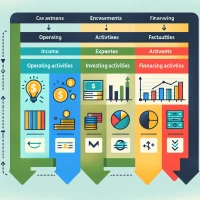
Complementing the income statement and the balance sheet, the statement of cash flows plays a pivotal role in providing a comprehensive overview of a company’s cash movements during a specific period. It meticulously tracks the cash generated and utilized through the company’s operating, investing, and financing activities, offering valuable insights into the sources and applications of cash within the business. Unlike the income statement and balance sheet, which are formulated based on accrual accounting principles, the cash flow statement provides a clear and unambiguous representation of the actual cash inflows and outflows, thereby offering a distinct perspective on the company’s financial performance.
The statement of cash flows is typically segregated into three primary categories: operating activities, investing activities, and financing activities. The operating activities section delineates the cash flows resulting from the company’s core business operations, including revenue generation and operational expenses. Investing activities encompass the cash flows associated with the acquisition or sale of long-term assets, such as property, equipment, and investments, while financing activities elucidate the cash flows related to the company’s capital structure, including equity and debt issuances, dividend payments, and loan transactions.
Operating, Investing, and Financing Cash Flows
Understanding the intricacies of operating, investing, and financing cash flows is pivotal in comprehending a company’s financial performance and its ability to generate and manage cash effectively. The statement of cash flows provides stakeholders with vital information regarding the sources of cash, the allocation of funds, and the company’s overall cash position. This detailed breakdown of cash flows enables investors, analysts, and decision-makers to evaluate the company’s financial resilience, investment strategies, and capacity for sustainable growth.
Financial analysts, investors, and creditors leverage the statement of cash flows to gain a comprehensive understanding of a company’s financial viability, liquidity, and operational efficiency. The data presented in this financial statement is instrumental in assessing a company’s cash management practices, its ability to fund its operations and investments, and its capacity to meet financial obligations. Additionally, the statement of cash flows serves as a critical tool in financial modeling and valuation, offering invaluable insights for projecting future cash flows, conducting scenario analyses, and making well-informed investment and financing decisions.
Net Income Links the Three Financial Statements
An essential component of the income statement, net income serves as a pivotal link that connects the three fundamental financial statements: the income statement, the balance sheet, and the statement of cash flows. Net income, also referred to as the bottom line, represents the residual profit after deducting all expenses, including COGS, operating expenses, non-operating expenses, and taxes, from the total revenue. This critical figure is intrinsically linked to both the balance sheet and the statement of cash flows, playing a central role in providing a cohesive and interconnected view of a company’s financial performance and position.
Net income on the income statement is intricately connected to the balance sheet, specifically to the shareholders’ equity section. This is attributed to the fact that the net income directly contributes to the calculation of a company’s retained earnings, which is a vital component of the shareholders’ equity. Retained earnings, derived from the cumulative net income of the company, reflect the portion of the company’s profits that are retained and reinvested in the business, rather than distributed as dividends. As a result, the net income on the income statement significantly influences the shareholders’ equity and, consequently, the overall financial position of the company as depicted in the balance sheet.
Net Income on the Income Statement Feeds Retained Earnings
Given its direct impact on the calculation of retained earnings, net income assumes a critical role in shaping the long-term financial health and sustainability of a company. It serves as a key determinant of the amount of earnings that are plowed back into the business for future growth initiatives, investment opportunities, and operational expansion. The relationship between net income, retained earnings, and the balance sheet underscores the interconnected nature of the financial statements and amplifies the significance of net income as a foundational element in assessing a company’s financial performance and strategic trajectory.
Moreover, net income also serves as the initial point in the calculation of cash from operations on the statement of cash flows. By adding back non-cash expenses, such as depreciation and amortization, to the net income and adjusting for changes in working capital, the statement of cash flows derives the crucial metric of cash from operations, which delineates the actual cash generated or expended from a company’s core business activities. This process further underscores the integral relationship between the net income on the income statement and the statement of cash flows, highlighting the role of net income in articulating the actual cash-generating capacity of the company.
Working Capital Adjustments Relate Income and Balance Sheet Changes
In the realm of financial reporting and analysis, the prudent management of working capital and its inherent adjustments play a pivotal role in establishing the correlation between changes in the income statement and the balance sheet. Working capital, defined as the variance between a company’s current assets and current liabilities, serves as a barometer of a company’s operational efficiency and short-term financial health. The adjustments in working capital are intrinsically linked to changes in the income statement and the balance sheet, reflecting the company’s management of its operating liquidity and its ability to fund its day-to-day operations.
By meticulously analyzing the changes in working capital, stakeholders can glean insights into a company’s operational intricacies, including its management of inventory, receivables, and payables. These adjustments directly influence the cash flows from operating activities and provide a comprehensive understanding of the company’s ability to effectively manage and utilize its working capital to sustain its operational activities. Furthermore, the relationship between working capital adjustments, changes in the income statement, and the balance sheet elucidates the integrated nature of the three financial statements and underscores the critical role of working capital in shaping a company’s financial performance and operational resilience.
Subsection
Subsections present within the financial statements organization hold significant relevance in delineating specific components and their interrelationships. These distinct segments aid in presenting comprehensive and detailed information regarding various facets of a company’s financial position, performance, and cash flows. Furthermore, the meticulous categorization and segmentation of financial data within subsections enhance the clarity and interpretability of the financial statements, enabling stakeholders to conduct in-depth analyses and glean valuable insights into the company’s financial operations and standing.
Subsections within the financial statements organization also facilitate a comprehensive breakdown of complex financial data, offering detailed information on specific elements such as revenue sources, expense categorizations, asset classifications, and liability delineations. This detailed presentation of financial information within subsections serves as a critical resource for stakeholders, including investors, analysts, and management, in evaluating and understanding the intricate dynamics of a company’s financial performance, position, and cash flows.
Subsubsection
The inclusion of subsubsections within the financial statements organization provides an additional layer of granularity, enabling a more detailed exploration of specific components and line items. This heightened level of categorization and segmentation offers a comprehensive and exhaustive breakdown of financial data, underscoring the interconnected nature of various elements within the financial statements. Moreover, subsubsections aid in unraveling complex financial information, facilitating an in-depth analysis of the company’s financial performance, position, and cash flows at a micro level, thereby empowering stakeholders with the insights required for informed decision-making and strategic planning.
Furthermore, subsubsections play a pivotal role in enhancing the accessibility and interpretability of financial statements, allowing stakeholders to navigate through intricate financial data with precision and focus. This detailed organizational structure within the financial statements organization ensures that stakeholders can extract nuanced and specific information pertinent to their analyses, thereby fostering a comprehensive understanding of the company’s financial dynamics and facilitating well-informed decision-making processes.
Conclusion
In conclusion, understanding the relationship between the income statement, balance sheet, and cash flow statement is crucial for managers to make informed financial decisions. These three interconnected statements provide valuable information about a company’s profitability, financial position, and cash movements. Each statement plays a significant role in the overall financial reporting process and must be analyzed together to get a comprehensive understanding of a company’s financial health.